Vancouver / WA

Asbestos Insulation Removal in Vancouver, WA

Vancouver WA Asbestos Removal removes asbestos pipe insulation, boiler lagging, duct wrap and vermiculite attic fill from Vancouver, WA homes and buildings. Thermal system insulation on heating pipes and fittings is among the more friable asbestos materials, so it comes off wet inside containment, with HEPA-filtered exhaust and vacuums, or with glove bags on individual pipe runs where the layout allows.

Because SWCAA sizes notices in linear feet as well as square feet, measuring pipe runs and fittings is part of the plan. Insulation removal is available across Vancouver, WA and nearby Clark County communities, Camas and Washougal included.

Describe the insulation
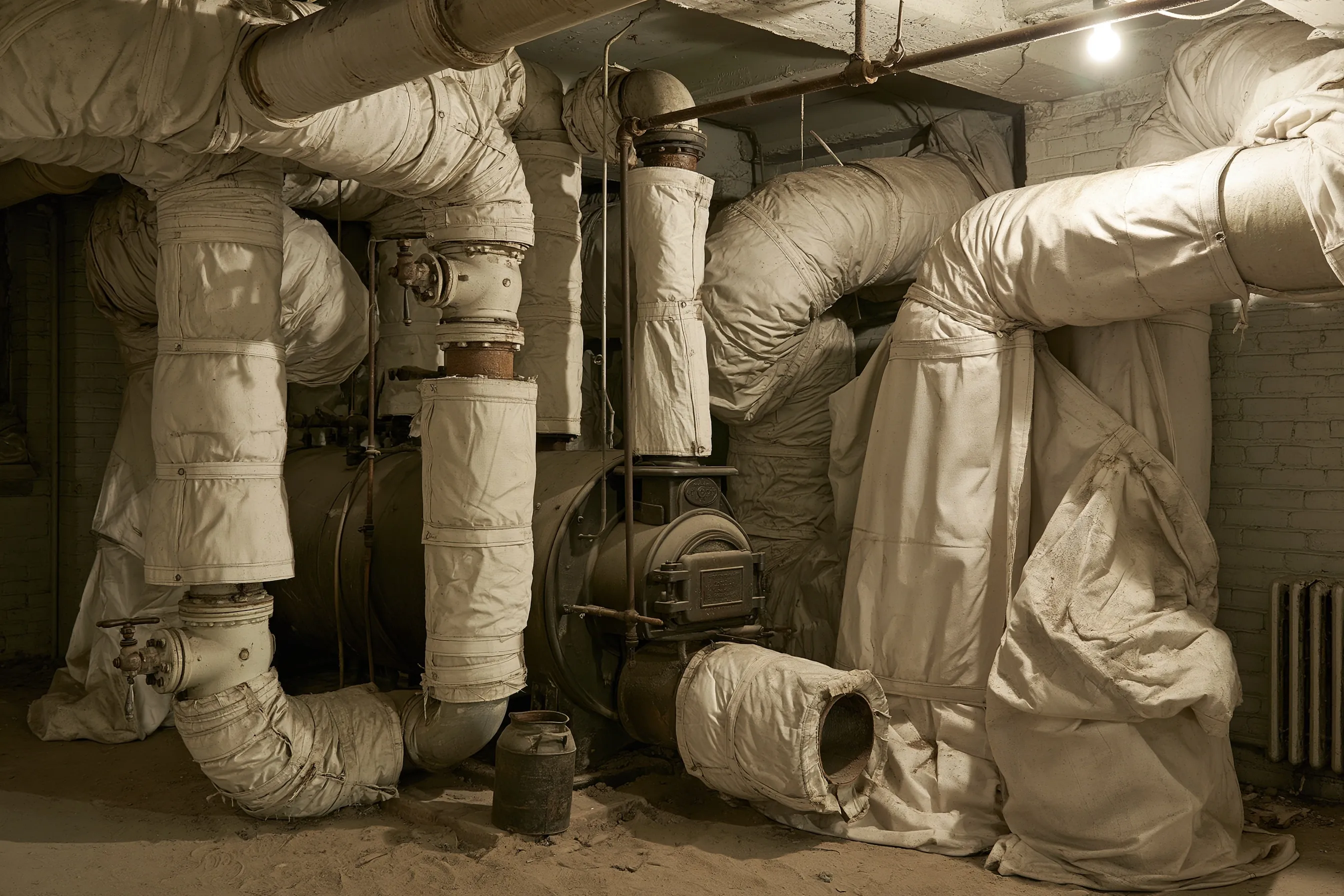
Old boiler and pipe runs with white wrapped insulation in a basement mechanical room

Insulation removal options

Heating pipe and boiler insulation

White or gray wrap on heating pipes and the molded insulation on elbows and fittings is thermal system insulation, sampled at least three times per homogeneous area if it is not presumed. Quantities are counted in linear feet: under 10 feet carries no SWCAA fee for a contractor, 10 to 259 feet is the $153 tier and 260 to 999 feet the $384 tier in the 2026 schedule.

Duct wrap and tape

Older forced-air systems sometimes used paper-like tape at duct seams and wrap around ducts and register boots. Replacing a furnace or rerouting ducts disturbs it, so it belongs in the scope before the HVAC work is booked. A short run of seam tape can stay in the small-job category; a crawlspace full of wrapped duct will not.

Vermiculite attic insulation

Loose, pebble-like fill in gray-brown or silver-gold, poured between attic joists, is likely vermiculite. EPA advises assuming it contains asbestos, leaving it undisturbed and not storing things in that attic, and hiring a professional asbestos contractor before remodeling around it. Removal happens from a sealed attic under HEPA-filtered negative pressure, with careful bagging.

Equipment removed as a unit

An old boiler, tank or section of insulated pipe can sometimes leave intact instead of being stripped in place. SWCAA allows components to be wetted, wrapped leak-tight and labeled as a unit, and large components such as boilers need not be stripped if they can be removed and disposed of without damaging the asbestos. That can cut the time spent working on friable material inside the house.

Containment and waste handling for insulation

SWCAA 476-060 sets the work practices: a controlled area marked with barriers and warning signs, material kept adequately wet as it comes off, no visible emissions, debris collected at the end of every working day, and HEPA filters on exhaust and vacuum systems. Removed insulation goes into leak-tight containers before it leaves the containment.

Each bag or wrapped section carries an asbestos warning label marked with the collection date, the waste generator, the certified supervisor and the location. Waste must reach an approved disposal site within 10 days of collection, and a waste shipment record follows it. SWCAA’s disposal list names Clark County transfer stations that ask for a call about load requirements, so the destination is settled before removal starts.

Pipe wrap that looks like ordinary fiberglass can still contain asbestos, so asbestos testing and AHERA surveys often come before an insulation quote. A furnace swap tends to disturb nearby duct tape and flooring as well, and Vancouver WA Asbestos Removal covers those materials too.

Your next step

Request an insulation removal quote

Tell us where the insulation is (basement, crawlspace, attic or ducts), roughly how many feet of pipe or square feet, and whether the heating system is being replaced. We'll get back to you soon with an estimate or any questions we have. Estimates are free and there's no obligation.

Call (360) 803-1974

Call (360) 803-1974